3rd Annual Farmington History Lecture
featuring Dr. Saladin Ambar, author of
Murder on the Mississippi:
The Shocking Crimes that Shaped Abraham Lincoln
The violence that shaped Lincoln
— and the questions it raises today
An evening with Dr. Saladin Ambar
What can the events that shaped Abraham Lincoln teach us about freedom, democracy,
and the rule of law? Join author and Rutgers University political scientist Dr. Saladin Ambar
for a compelling evening of history under the Farmington Pavilion, with a
barbecue dinner from Kingsley’s.
OCTOBER 15 | 6 PM
Public lecture with Dr. Saladin Ambar at Farmington Historic Home
Dinner provided by Kingsley’s Meats & Catering
Interested in a private dinner with Dr. Ambar at the Frazier History Museum?
See more details further below.
THE EXPERIENCE
An evening of history, hospitality, and fresh perspective
DISCOVER
Explore the events at the heart of Murder on the Mississippi: The Shocking Crimes that Shaped Abraham Lincoln and their significance for Lincoln’s emerging political voice.
HEAR FROM THE AUTHOR
Hear Dr. Ambar examine the connections between racial violence, slavery, and the struggle to uphold democratic ideals.
GATHER AT FARMINGTON
Enjoy barbecue from Kingsley’s and an engaging lecture in the setting of Farmington’s historic grounds.
WHY THIS HISTORY MATTERS
Before the presidency, a reckoning with violence
In 1836, a mob murdered Francis McIntosh, a free Black riverboat worker, in St. Louis. In Murder on the Mississippi, Dr. Ambar explores how this crime helped shape Lincoln’s thinking about slavery, mob violence, and the rule of law.
The story raises questions that remain urgent: What happens when violence undermines justice? How do leaders respond? And what does it take to uphold the promise of freedom?
Join us to explore this history and consider its enduring significance.
MEET THE SPEAKER
Dr. Saladin Ambar
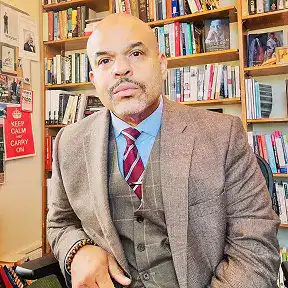
Dr. Saladin Ambar is a Rutgers University political scientist and the author of Murder on the Mississippi: The Shocking Crimes that Shaped Abraham Lincoln.
His work brings a fresh perspective to Lincoln’s early political development and the relationship between race, leadership, and American democracy.
CHOOSE YOUR EVENING
Dinner & Public Lecture
October 15 | 6PM
Farmington Pavilion
An evening with Dr. Saladin Ambar exploring the history behind Murder
on the Mississippi.
Your $95 ticket includes:
Admission to the lecture
Barbecue dinner from Kingsley’s
Books will be available for purchase.
Private Dinner
with Dr. Ambar
October 14
Frazier History Museum
Attend a private dinner with Dr. Saladin Ambar at the Frazier History Museum
Your $500 ticket includes:
Admission to the private dinner
A hardcover copy of
Murder on the Mississippi
PLAN YOUR VISIT
When should I arrive?
6:30 p.m. EST
Where is the public lecture and Kingsley’s dinner?
Under the Pavilion at Farmington.
Where should I park?
Park in the main parking lot once you enter campus through the front gates, then walk up the hill to the Pavilion. There will be signs to help lead the way.
Is the venue accessible?
We have parking spaces saved next to the Pavilion, so there is no walking up the hill required, for those with special mobility needs. The venue is then fully accessible including bathrooms in an adjoining building and the Carriage house, both of which are a flat journey away.
What happens if it rains?
The show will go on! The Pavilion features wide eaves and you won’t get wet at all once you’re under the Pavilion.
Who should I direct any other questions to?
Please reach out to [email protected] with any additional questions.
MAKE AN EVENING OF HISTORY
AT FARMINGTON
Join Dr. Saladin Ambar for barbecue, fresh perspective, and an
exploration of the events that helped shape Abraham Lincoln.
Thursday, October 15 | 6 PM
$95 per person · Dinner and lecture included
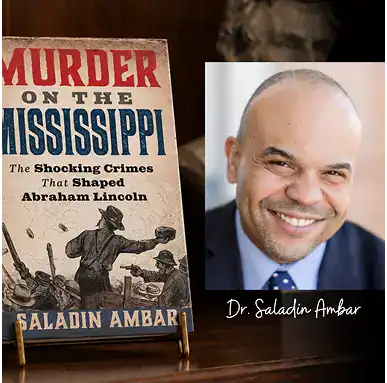
Murder on the Mississippi is available for sale in the Farmington Museum Store and will be available at all events as well.

October 15 Lecture dinner provided by Kingsley’s Meats & Catering
ABOUT THE BOOK
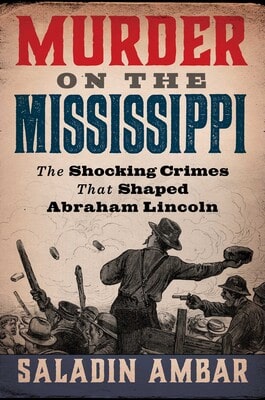
A fresh investigation of antebellum politics and the era’s foremost champion of equality before the law.
On April 28, 1836, a young free Black man, ashore in St. Louis from the riverboat on which he worked as a steward, was falsely arrested. On the way to jail, Francis McIntosh, told that his fate was prison or death, tried to escape, killing a sheriff’s deputy in his failed attempt. A crowd lynched him, chaining him to a tree and burning him alive. In Rutgers University political scientist Ambar’s telling, the incident directly inspired Lincoln’s first major political address, in which the future president spoke of the fracturing of civic order on the frontier and, in that “growing lawlessness,” the threat to democracy.
Thank you to our partners